There is a specific, quiet grief in being physically next to someone on the couch every night while feeling completely alone. Loneliness while single is a natural desire for companionship; loneliness inside an existing committed partnership is an agonizing sense of emotional invisibility.
Loneliness in a relationship is rarely caused by a sudden betrayal; it is the slow accumulation of missed bids for connection, unacknowledged vulnerabilities, and domestic transactionalism. When roommates replace romantic partners, the psychological bridge between two minds slowly collapses under the weight of neglected attunement.
Turning-Toward Ratio
Percentage of micro-bids acknowledged in happy relationships vs relationships destined for divorce.
Positive Interaction Baseline
Ratio of positive to negative interactions required to maintain emotional safety during conflict.
Daily Attunement Ritual
Daily distraction-free dialogue required to keep emotional loneliness at bay.
1. The Erosion of Intimacy: How Domestic Transactionalism Kills Connection
| Stage of Erosion | Daily Interaction Reality | Psychological Experience | Relational Consequence |
|---|---|---|---|
| Micro-Bid Neglect | Partner points out a bird or sighs; partner ignores or scrolls phone. | Feeling dismissed on minor emotional reaching out. | Partner stops making spontaneous bids for connection. |
| Transactional Functionalism | All conversations revolve around logistics: groceries, bills, schedules. | Relationship feels like a business partnership or chore management unit. | Romance and deep curiosity about the partner's inner world evaporate. |
| Emotional Disengagement | Hiding personal fears, aspirations, and stresses to avoid superficial reactions. | Living as parallel roommates who share a bed and mortgage. | Profound emotional loneliness and vulnerability to emotional affairs. |
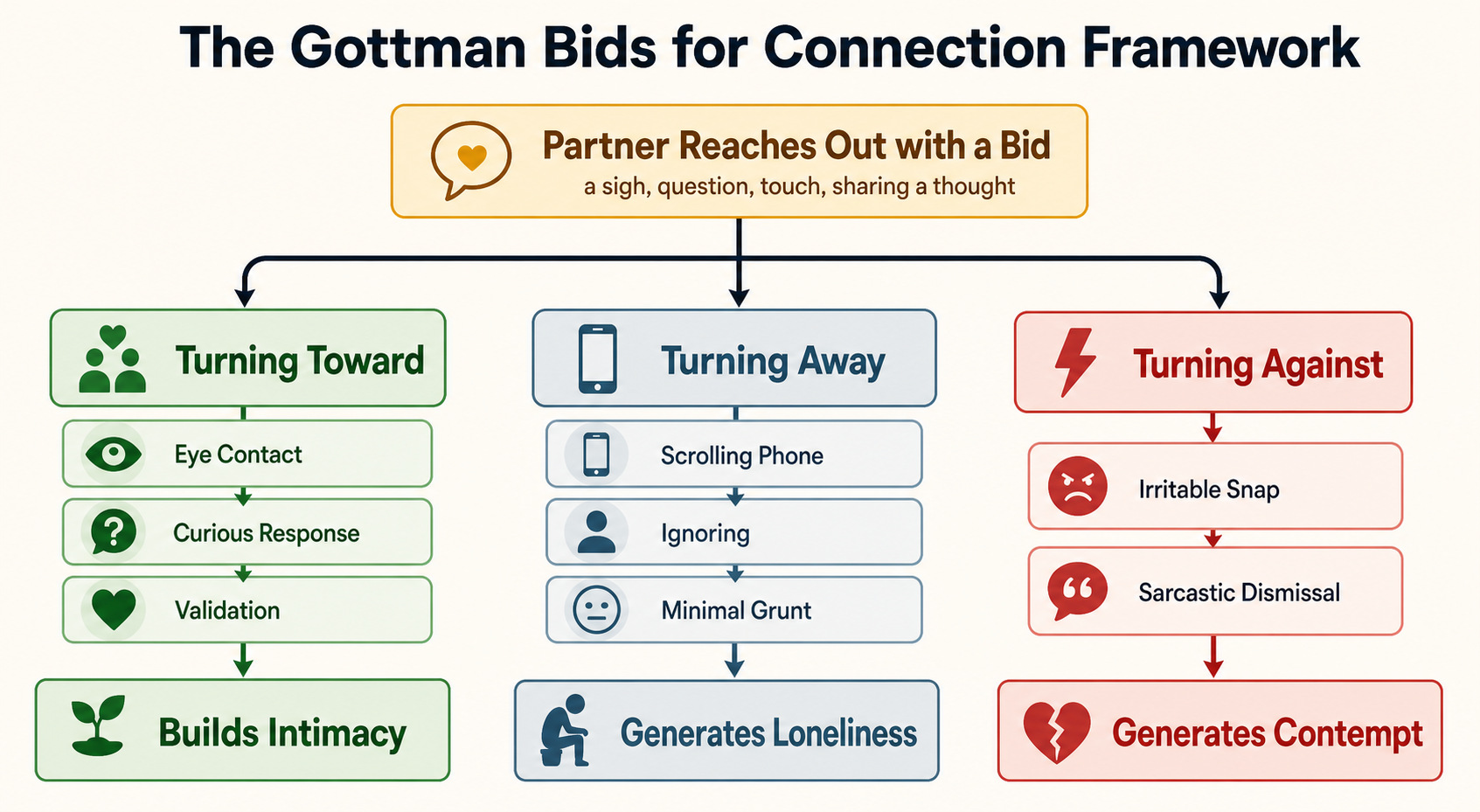
“Emotional intimacy is not built in grand romantic vacations; it is built in the microscopic moments when your partner sighs and you put down your phone and ask: 'What was that sigh about?'”
2. The Re-Attunement Protocol: Moving from Roommates to Intimate Partners
- Audit the 'Turning-Toward' Rate: Consciously notice when your partner makes a verbal or physical bid, and practice setting down digital screens to engage for 30 seconds.
- Institute the Daily 'State of the Heart' Check-in: Ask one open-ended question every evening that has nothing to do with domestic chores: 'What was the most exhausting part of your day?'
- Express the Loneliness Without Accusation: Shift from attacking ('You never pay attention to me') to vulnerable truth-telling ('I miss you and feel lonely lately, and I want to find our way back to each other').
Relational Reconnection Checklist
- Ban smartphones and laptops from the dining table and the bedroom.
- Schedule a non-negotiable weekly date night with an explicit rule: zero conversation regarding household chores or family logistics.
- Practice daily physical affection (a 6-second hug or morning kiss) to trigger somatic oxytocin release.